By Steffie | Doggie Faire BnB — In-Home Dog Boarding in the Quercy Region, South West France
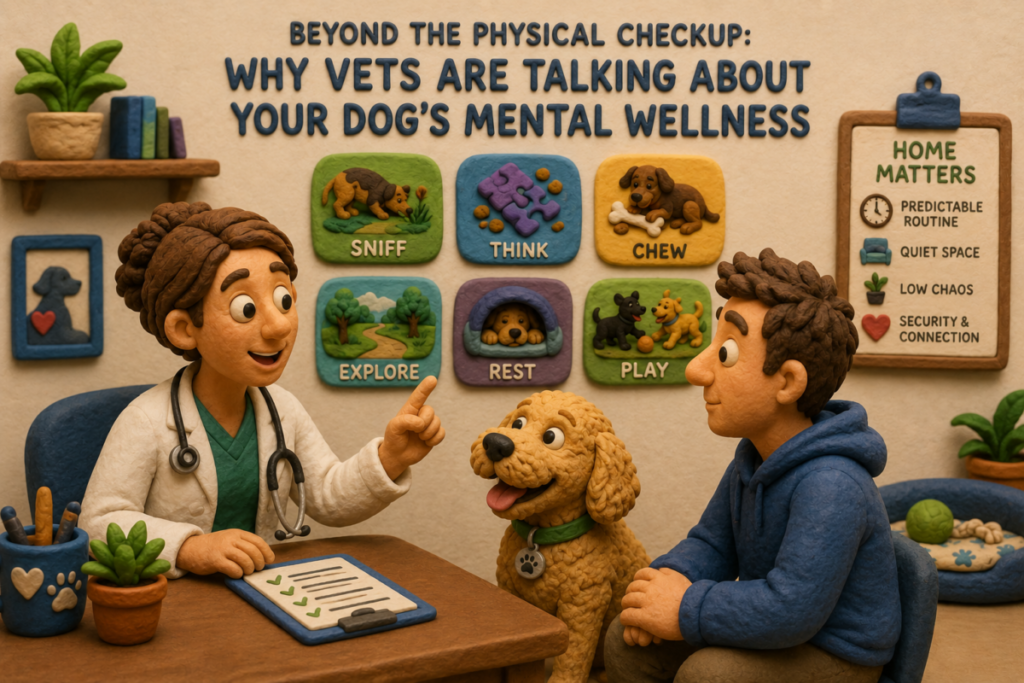
For decades, the annual vet visit followed a predictable script: weight check, vaccinations, a look at teeth and joints, maybe a question about appetite. Physical health was the whole conversation.
That’s changing. Walk into a veterinary clinic today and you’re increasingly likely to hear questions that sound more like they belong in a therapist’s office than an exam room. Is your dog getting enough mental stimulation? Do they seem bored during the day? How do they handle being left alone?
This shift isn’t a trend — it’s a correction. Vets are recognising what dog owners have long suspected: a dog’s mental state and physical health are deeply intertwined, and you can’t fully address one while ignoring the other.
The Missing Piece in Traditional Pet Care
Physical symptoms are easy to spot. Limping, weight change, a dull coat — these show up on a scale or under a stethoscope. Mental and emotional stress is quieter. It doesn’t announce itself with a fever, but it shows up in other ways: destructive chewing, excessive licking, pacing, changes in sleep, reactivity, or a dog that simply seems “flat” and disengaged.
Left unaddressed, chronic stress and boredom don’t just affect behaviour — they affect the body too. Stress hormones like cortisol, when elevated over long periods, have been linked to weakened immune response, digestive issues, and even changes in how dogs process pain. A bored, understimulated dog isn’t just harder to live with; it may genuinely be a less healthy dog.
What “Enrichment” Actually Means
Enrichment has become something of a buzzword, but at its core, it simply means giving a dog opportunities to use their brain and body in ways that satisfy their natural instincts — sniffing, problem-solving, chewing, exploring, and socialising.
A few ways this shows up in daily life:
- Sniff-based activities — scatter feeding, snuffle mats, or slow walks that let a dog’s nose lead the way
- Problem-solving — puzzle feeders, hide-and-seek games, or basic training sessions that require thinking, not just repetition
- Variety in routine — new walking routes, novel textures and toys, or simply rearranging furniture occasionally
- Species-appropriate outlets — appropriate chew items, digging opportunities, or supervised play that lets natural behaviours happen safely
None of this requires elaborate equipment or hours of extra time. Ten focused minutes of enrichment can often do more for a dog’s wellbeing than an hour of unstructured backyard time.
Why the Home Environment Matters So Much
Here’s the part that often gets overlooked: a dog’s environment isn’t just a backdrop to their life — it’s an active ingredient in their mental state.
Dogs are remarkably sensitive to the rhythm and feel of the spaces they live in. A calm, predictable home with defined routines, comfortable resting spots, and low chaos gives a dog’s nervous system a chance to actually rest. Conversely, a chaotic, understimulating, or overly restrictive environment can quietly generate stress that builds over weeks and months, even when nothing dramatic ever “happens.”
This is why so many behaviourists and vets now emphasize environment first, training second. A dog struggling with anxiety, reactivity, or destructive habits often isn’t lacking discipline — they’re lacking a home setup that supports their emotional needs. Simple changes — a designated quiet space, consistent daily structure, reduced exposure to overstimulating triggers — can produce results that training alone can’t achieve.
What This Means for Your Next Vet Visit
If your vet starts asking about your dog’s daily routine, alone time, or play habits, it’s not small talk — it’s part of a more complete picture of health. Consider coming prepared to talk about:
- How your dog spends their time when you’re not actively engaging with them
- Whether they have consistent access to mental stimulation, not just physical exercise
- Any behaviour changes, even subtle ones, that might signal stress rather than “just personality”
- What their home environment actually looks and feels like day to day
The Bigger Picture
Physical and mental health were never really separate in dogs — we just used to measure only one of them. As veterinary science catches up to what dog owners have felt intuitively for years, the message is becoming clear: a healthy dog is a stimulated, secure, and mentally settled dog, not just one with normal bloodwork.
The good news is that supporting canine mental wellness doesn’t require a complete lifestyle overhaul. It starts small — with the environment a dog comes home to every single day.