By Steffie | Doggie Faire Bnb — In-Home Dog Boarding in the Quercy Region, South West France
As the temperatures begin to climb, we all look forward to spending more time outdoors with our furry friends. Whether it’s a trip to the park, a hike on the trails, or just hanging out in the garden, summer is a wonderful time for dogs.
However, heat poses a serious risk to our canine companions. Unlike humans, dogs cannot sweat through their skin to cool down; they rely primarily on panting to regulate their body temperature. This makes them significantly more susceptible to heatstroke, a life-threatening medical emergency that can progress in a matter of minutes.
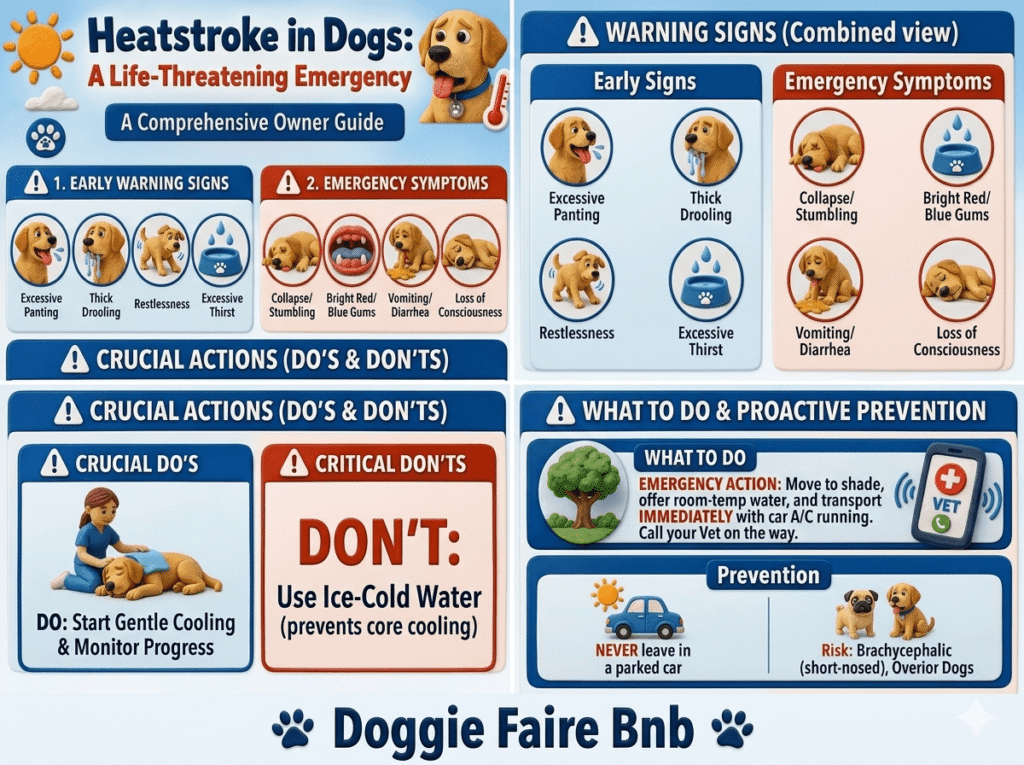
Recognising the Signs of Heatstroke
Heatstroke doesn’t always start with a collapse. It is a spectrum, and catching the early warning signs can make all the difference in your dog’s recovery.
Early Warning Signs
- Excessive, rapid panting: Persistent breathing that won’t slow down even when resting.
- Thick, ropey drool: Excessive salivation or thick, sticky mucus.
- Restlessness: An inability to find a comfortable position or settle down.
- Intense thirst: A sudden, frantic need to drink.
Emergency Symptoms (Seek Veterinary Help Immediately)
- Collapse or stumbling (ataxia): A clear sign of neurological distress.
- Colour changes in gums/tongue: Look for bright red, purple, or even blue/grey tints.
- Gastrointestinal distress: Vomiting or diarrhoea, which may contain blood.
- Loss of consciousness: Stupor, seizures, or total unresponsiveness.
What to Do in an Emergency
If you suspect your dog is suffering from heatstroke, every second counts.
- Move to Shade: Immediately get your dog out of the sun and into a cool, shaded area.
- Gentle Cooling: Offer room-temperature water. Start by cooling them with room-temperature water or cool, damp towels.
- Important: Never place wet towels on top of your dog. This can trap heat against their body rather than allowing it to escape, which can dangerously increase their core temperature. Instead, place towels underneath them or use them to wipe their paws and belly.
- Transport Immediately: Call your vet while you are on the way. Keep the car air conditioning running to provide active airflow during transport.
The “Critical Don’t”
Never use ice-cold water. While it sounds counterintuitive, shocking a dog with ice-cold water causes blood vessels to constrict, which traps heat inside the body and can cause the dog’s temperature to plummet too far, leading to other serious medical complications.
Proactive Prevention
The best treatment for heatstroke is prevention. Here are the three non-negotiables for a safe summer:
- Never leave a dog in a parked car: Not even for a minute, and not even with the windows cracked. Temperatures inside a vehicle can become lethal in less than 10 minutes.
- Know your dog’s risk: Brachycephalic (short-nosed) breeds, senior dogs, and overweight dogs are at a much higher risk. Keep activities short and low-intensity for these pups.
- Stay hydrated: Always have fresh, cool water and shade available whenever your dog is outside.
Disclaimer: This guide is for educational purposes. Always prioritise professional veterinary care if you suspect your pet is experiencing a medical emergency.